
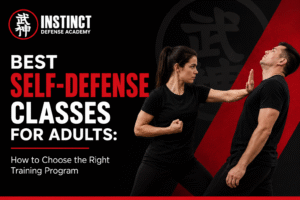
 Many adults consider self-defense training after a change in lifestyle, a new job, moving to a different area, becoming a parent, or simply wanting to feel more confident in everyday situations. If you are searching for adult self defense classes, the goal is usually not to become a professional fighter. Most people want practical skills, better awareness, and the confidence to respond if a situation becomes unsafe.
Choosing the right program matters because not every martial arts class is designed around real-world self-defense. Some schools focus primarily on competition, forms, or traditional techniques. A practical self-defense program should help adults understand awareness, avoidance, verbal boundaries, escape skills, and realistic responses under stress.
Why Adults Choose Self-Defense Training
Adults often begin training for reasons that go beyond physical fitness. Learning self-defense can help people feel more prepared when walking to a car, traveling, working late, or navigating unfamiliar environments. It can also improve confidence, discipline, and general fitness.
Common reasons adults join include:
- Wanting practical personal safety skills.
- Building confidence after a stressful experience.
- Improving awareness of surroundings.
- Learning how to set verbal and physical boundaries.
- Getting a full-body workout with a clear purpose.
- Joining a supportive community while learning useful skills.
What Makes a Good Self-Defense Program Different?
A quality self-defense program should be practical, structured, and adaptable for beginners. The training should focus on skills that can be remembered under pressure rather than complicated techniques that require years of practice.
Look for a program that teaches:
- Situational awareness and threat recognition.
- Verbal boundary setting and de-escalation.
- Escape techniques from common grabs or holds.
- Basic striking and movement for self-protection.
- How to create distance and get to safety.
- Training that gradually introduces realistic stress without overwhelming beginners.
The Best self defense classes for adults also provide a respectful environment where students can ask questions and progress at their own pace.
Krav Maga vs Traditional Martial Arts
Traditional martial arts can offer valuable benefits such as discipline, fitness, coordination, and technical skill. However, some adults specifically want training that emphasizes immediate, practical self-defense scenarios.
Krav Maga classes are often designed around simple movements, awareness, and responses to common threats. The focus is typically on protecting yourself, creating an opportunity to escape, and getting to safety rather than winning a competition. For beginners, this can make the training feel directly relevant to everyday personal protection.
Who Should Join Adult Self-Defense Classes?
Most adult self-defense programs can be adapted for a wide range of ages and fitness levels. You do not need previous martial arts experience to begin. A good academy should provide modifications and coaching so that beginners can learn safely.
Self-defense training may be a good fit for:
- Adults with no prior martial arts experience.
- Busy professionals who want practical fitness and safety skills.
- Parents who want greater confidence in everyday situations.
- College students or young adults living independently.
- People returning to exercise after a long break.
- Anyone who wants to feel more prepared and aware.
What You Will Learn in a Beginner Program
Beginner self defense classes usually start with awareness, movement, and simple techniques. The goal is to build a foundation that feels manageable and useful.
A typical beginner may learn:
- How to recognize potentially unsafe situations early.
- How to use confident verbal commands and boundaries.
- How to move, create distance, and avoid being trapped.
- Basic strikes using natural body mechanics.
- Simple defenses against common grabs.
- How to escape and seek safety rather than remain in a confrontation.
Common Mistakes Beginners Make
One common mistake is assuming that self-defense is only about punching or kicking. In reality, awareness, communication, and escape are often the most important skills. Another mistake is choosing a program solely because it looks intense online. Effective training should be challenging, but it should also be safe, progressive, and appropriate for beginners.
Beginners may also compare themselves to experienced students too quickly. Everyone starts somewhere, and consistent practice is more important than learning everything in the first few classes.
How to Choose the Right Academy
When comparing self defense classes near me, consider more than location and price. Visit the academy if possible, observe a class, and ask how beginners are introduced to training.
Questions to ask include:
- Is the program designed for beginners?
- What practical self-defense skills are taught?
- How are students kept safe during training?
- Do instructors provide individual coaching?
- Is the class focused on competition or real-world protection?
- Can I try an introductory class before committing?
The right Self defense school should feel professional, welcoming, and focused on helping you build usable skills over time.
Final Thoughts
Adult self defense classes can provide much more than physical techniques. They can help you become more aware, more confident, and better prepared to make decisions in uncomfortable situations. The best program is one that teaches practical skills, respects beginners, and helps you progress consistently.
If you are looking for adult self defense classes in North Carolina, consider a program that combines realistic training, supportive coaching, and practical personal protection skills for everyday life.
FAQ’s
Do I need previous martial arts experience to join?
No. Beginner self defense classes are designed for adults with little or no prior experience. A good program will introduce techniques gradually and provide coaching as you learn.
Are self-defense classes only for very fit people?
No. Many programs can be adapted for different fitness levels. The goal is to build skills, confidence, and conditioning over time rather than expecting everyone to begin at the same level.
What is the difference between self-defense and martial arts?
Martial arts may include competition, forms, tradition, and long-term technical development. Self-defense training focuses more directly on awareness, avoidance, boundary setting, escape, and practical responses to common threats.
How often should I train?
Many beginners benefit from attending one or two classes per week consistently. Regular practice helps techniques become more familiar and improves confidence over time.
Can I try a class before signing up?
Many academies offer an introductory or trial class. This allows you to experience the training environment, meet the instructors, and decide whether the program is a good fit for you.