
Finding the Right Martial Arts Class for Your Child
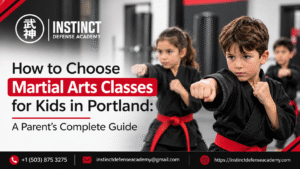
Choosing an extracurricular activity for your child involves more than finding something that keeps them busy after school. Parents often look for activities that encourage movement, provide opportunities to learn new skills, and create a positive environment where children can develop at their own pace.
Martial arts may be one option worth exploring.
However, not every martial arts school offers the same teaching style, curriculum, or class environment. Some programs emphasize traditional martial arts, while others focus on sport, physical conditioning, or age-specific instruction.
Before enrolling your child, it is important to understand what the school teaches, how instructors work with young students, and whether the environment matches your child’s needs.
If you are exploring kids’ martial arts classes in Portland, Bethany, or NW Portland, this guide can help you compare programs and ask the right questions.
What Can Children Learn Through Martial Arts?
The learning experience depends on the martial arts discipline, instructor, class structure, and the child’s participation.
A well-organized children’s program may provide opportunities to practice:
Movement and Coordination
Children may work on balance, controlled movement, footwork, and coordination through age-appropriate activities.
These skills can be developed gradually through repetition and clear instruction.
Following Instructions
Martial arts classes often involve demonstrations, practice sequences, and structured activities.
Children have opportunities to listen, understand instructions, and apply what they have learned.
Respectful Interaction
Partner activities and group practice can introduce children to shared rules, turn-taking, and respectful communication.
The instructor’s behavior is important because children often learn as much from how adults interact as from the formal lesson itself.
Patience and Consistent Practice
Learning a new physical skill takes repetition. Children may need to practice a movement several times before they become comfortable with it.
A supportive instructor can help children understand that improvement takes time.
Awareness and Personal Safety Concepts
Depending on the curriculum, children may be introduced to age-appropriate personal safety concepts, such as awareness, boundaries, seeking help, and avoiding unnecessary confrontation.
Martial arts training should not be presented as a guarantee that a child can protect themselves in every situation. Adult supervision, prevention, communication, and appropriate safety planning remain essential.
10 Things Parents Should Check Before Choosing a Martial Arts School
1. Is the Program Appropriate for Your Child’s Age?
Children at different developmental stages may need different instruction methods.
A program should explain its age requirements and how it adapts activities to students’ abilities.
Ask whether children are grouped by age, experience, or skill level and whether the instructor can explain what younger or first-time students should expect.
2. Does the Instructor Know How to Teach Children?
Teaching children requires more than knowing martial arts techniques.
Instructors should be able to explain movements clearly, maintain reasonable class structure, and respond appropriately when children need additional guidance.
Observe whether the instructor:
- Gives clear and age-appropriate instructions.
- Demonstrates movements before asking children to practice.
- Encourages questions.
- Corrects mistakes respectfully.
- Maintains appropriate supervision.
- Handles disruptions calmly.
- Avoids using humiliation or intimidation.
A child’s learning environment should be structured without relying on fear.
3. How Does the School Handle Safety?
Parents should understand how the school manages physical activities and partner practice.
Ask about:
- Supervision during every activity.
- Rules for physical contact.
- Protective equipment where relevant.
- How students are paired.
- How activities are adjusted for beginners.
- What happens if a child feels uncomfortable or needs a break.
- How injuries or incidents are communicated to parents.
No physical activity is entirely risk-free. A responsible school should explain its safety procedures clearly.
4. Is the Class Suitable for Complete Beginners?
A child should not need previous martial arts experience to understand an introductory class.
Ask whether new students are shown basic movements and class expectations before more complex activities are introduced.
A supportive beginner program should make it possible for children to learn gradually rather than comparing them constantly with experienced students.
5. What Does a Typical Class Include?
Do not rely only on broad descriptions such as discipline, confidence, or self-defense.
Ask what children actually do during a class.
Depending on the program, activities may include warm-ups, movement practice, demonstrations, basic techniques, partner exercises, and review.
Understanding the class structure helps parents decide whether the activities match their child’s interests and physical needs.
6. Does the School Encourage Respectful Behavior?
Martial arts classes often teach formal etiquette and training rules.
Look for an environment where respect applies to everyone: instructors, children, parents, and training partners.
Children should be encouraged to listen, cooperate, and treat others appropriately. Discipline should not mean tolerating bullying, humiliation, or unsafe behavior.
7. How Does the Instructor Handle Different Learning Speeds?
Children do not all learn at the same pace.
Some may understand a movement quickly, while others need more demonstrations and practice.
Ask how the instructor supports students who need additional explanation.
The goal should be steady learning, not making every child perform identically.
8. Are Class Times Practical for Your Family?
Consistency can be difficult if training times conflict with school, homework, family commitments, or travel.
Compare the available schedule with your family’s routine.
If you are travelling from Bethany or NW Portland, consider the journey as well as the class duration. A convenient schedule can make regular attendance easier.
9. Are Costs and Policies Clear?
Before joining, ask about:
- Registration fees.
- Tuition or membership costs.
- Uniform requirements.
- Additional equipment.
- Trial-class terms.
- Cancellation policies.
- Any grading or testing fees.
Understand the full cost before committing.
10. Can Your Child Try a Class First?
A trial class can help parents and children understand the environment before making a decision.
Observe whether your child feels welcomed, whether instructions are clear, and whether the activities seem appropriate.
After the session, ask your child what they enjoyed, what felt difficult, and whether they would like to learn more.
Martial Arts vs. Other Activities for Children
Parents may compare martial arts with swimming, dance, team sports, gymnastics, or other extracurricular activities.
Each activity offers a different experience.
Martial arts may appeal to children who enjoy structured individual skill development and guided practice. Team sports may provide more emphasis on coordinated group play and competition. Dance and gymnastics may offer different movement and performance opportunities.
The best choice depends on your child’s interests, physical needs, personality, and the quality of the particular program.
You do not need to choose an activity simply because it is popular. A positive environment that your child enjoys attending is an important consideration.
How Can Parents Support a Child Starting Martial Arts?
Encourage Learning Rather Than Immediate Performance
A beginner may struggle with new movements. Avoid expecting immediate results.
Praise effort, attention, patience, and willingness to practice.
Let the Child Ask Questions
Children should feel comfortable asking the instructor for clarification when they do not understand an activity.
Parents can reinforce this by treating questions as a normal part of learning.
Avoid Comparing Children
Every child develops at a different pace. Comparing progress with another student can create unnecessary pressure.
Focus on your child’s own participation and improvement.
Maintain a Healthy Balance
Martial arts should fit into a child’s broader routine, including school, rest, family time, and other interests.
If training begins to feel overwhelming, discuss the schedule and expectations with the instructor.
Exploring Children’s Martial Arts in Portland and Nearby Areas
Parents searching for martial arts classes in Portland may also be comparing programs around Bethany and NW Portland.
When exploring a local school, ask about its children’s curriculum, instructor approach, class schedule, safety practices, and beginner options.
You can contact Instinct Defense Academy to ask which programs are currently available for children and whether they are suitable for your child’s age and experience.
Parents interested in other academy programs can also review Adult Classes or Empower Her to understand the academy’s broader training offerings.
Before visiting, confirm the current children’s class availability and schedule directly with the academy.
Frequently Asked Questions
1. At what age can children start martial arts?
The appropriate starting age depends on the program, the child’s development, and the instructor’s approach. Ask the school about its minimum age and beginner class structure.
2. Are martial arts classes suitable for children with no experience?
Many programs welcome beginners. Parents should ask how new students are introduced to basic movements, class etiquette, and safety rules.
3. What should parents look for in a kids’ martial arts instructor?
Look for clear communication, respectful behavior, appropriate supervision, patience, and the ability to adapt instruction to children’s different learning needs.
4. Can martial arts help children learn discipline?
Structured classes may provide opportunities to practice listening, following instructions, patience, and consistent effort. Results vary by child and teaching environment.
5. Are children’s martial arts classes safe?
Safety depends on the program, instructor supervision, activities, and student behavior. Ask about physical contact, protective equipment, beginner progression, and incident procedures.
6. Do children need to be physically fit before joining?
Children do not generally need advanced fitness to explore beginner programs, but parents should discuss relevant physical limitations or concerns with the school before participating.
7. How often should children attend martial arts classes?
This depends on the child’s age, schedule, recovery, and the program’s expectations. Ask the instructor what attendance pattern is suitable for beginners.
8. What should my child wear to the first class?
Requirements differ between schools. Contact the academy before attending to confirm clothing and equipment expectations.
9. Should parents watch their child’s first martial arts class?
If the school permits observation, watching can help parents understand the teaching style, safety practices, and student interaction.
10. Where can I find kids’ martial arts classes near Bethany or NW Portland?
Contact local schools such as Instinct Defense Academy to confirm current children’s programs, class availability, location, and trial options.
Help Your Child Start With the Right Training Environment
The right martial arts program should offer more than physical activities. It should provide clear instruction, appropriate supervision, respectful interaction, and an opportunity for children to learn progressively.
Take time to compare programs, ask questions, and understand what your child will experience before enrolling.
Contact Instinct Defense Academy
Website: https://instinctdefenseacademy.com/
Email: instinctdefenseacademy@gmail.com
Phone: +1 (503) 875-3275
Ask About Available Training and Trial Classes
Trial Class Information: Explore Trial Classes